
PhD in Aerospace Engineering in Germany: From Finding a Supervisor to Landing an R&D Role

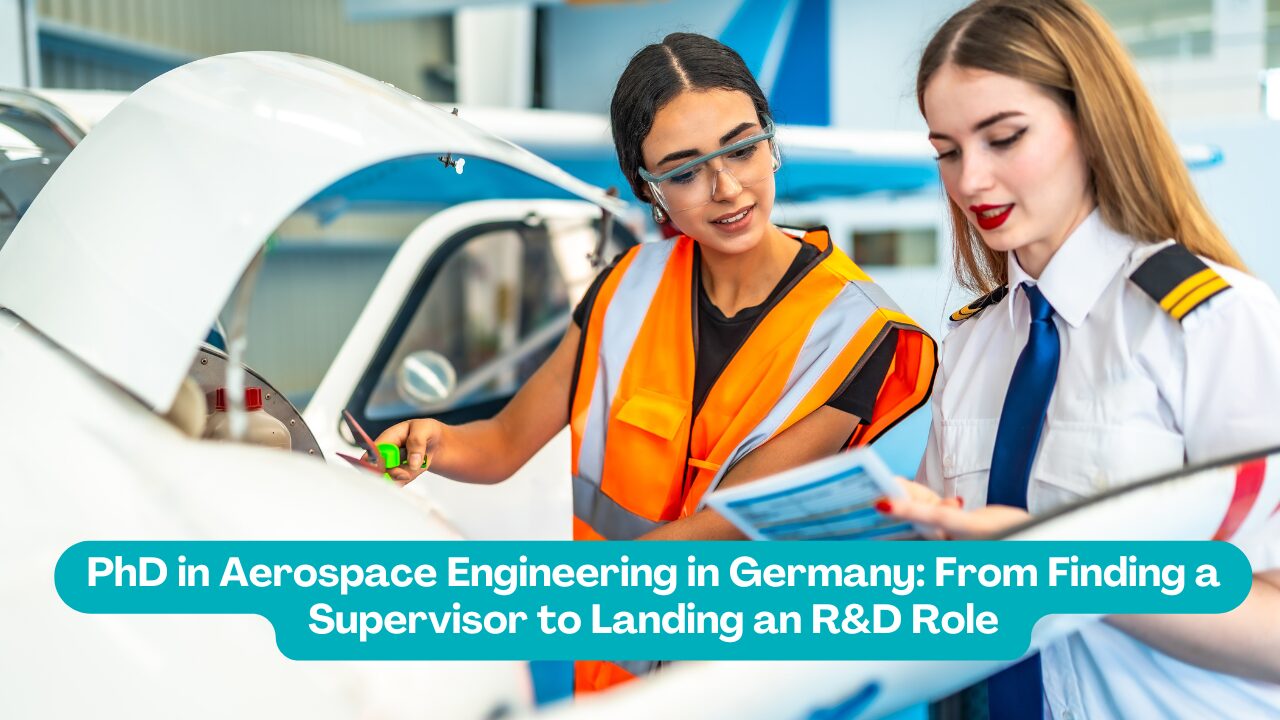
Pursuing a PhD in Aerospace Engineering in Germany is more than an academic milestone—it’s a launchpad for innovation and global R&D careers. As CEO of Galvanize and an admissions strategist with over 15 years of experience, I’ve guided hundreds of students and professionals to top German universities and research institutes. Germany’s unique ecosystem of public universities, DLR (German Aerospace Center) institutes, and industry partners makes it a global hub for aerospace research—and a magnet for ambitious minds from India, Southeast Asia, the Middle East, and Africa. Germany is the top non-English-speaking destination for international PhDs, with over 28,000 doctoral students from abroad, according to the DAAD.
In this comprehensive guide, I’ll demystify the process—from selecting programs to securing funding, and mapping your path from admission to R&D employment. Whether you’re aiming for a Master’s in Germany first or jumping straight to doctoral research, this blog is your step-by-step playbook.
Table of Contents
- The Landscape: Universities, DLR Institutes, and Aerospace Hubs You Should Know
- Structured vs. Individual Doctorates: Which Path Fits Your Research Style and Goals
- Supervisors and Chairs: How to Shortlist Labs and Write a Targeted Outreach Email
- Funding Pathways Decoded: DLR-DAAD, Munich Aerospace, DFG, and Industry Contracts
- Research Frontiers Now: AI for Flight Systems, Hypersonics, Composites, and Space Avionics
- Where Research Happens: University Chairs, DLR Co-Hosting, and Industry Co-Tutelle Models
- Employment Model: Contracts, Duration, Publications, and Graduate Program Add-Ons
- Infrastructure Advantage: Wind Tunnels, Satellite Testbeds, and HPC Access in Germany
- Outcomes That Matter: EU/Germany R&D Roles, NewSpace Startups, and Postdoc Tracks
- Your Application Sprint Plan: Proposal, Samples, References, and Timing Windows
The Landscape: Universities, DLR Institutes, and Aerospace Hubs You Should Know
Germany’s aerospace research ecosystem is one of the most advanced globally. Top universities include TU Munich, RWTH Aachen, TU Braunschweig, and the University of Stuttgart—each with specialized aerospace faculties and close ties to the DLR (German Aerospace Center). DLR runs over 30 institutes, many co-hosting doctoral candidates. Major aerospace hubs such as Munich, Hamburg, and Bremen offer proximity to Airbus, MTU Aero Engines, and NewSpace startups—creating unique opportunities for academic-industry collaboration.
If you’re considering a Master’s in Germany as a stepping stone, these same universities offer world-class Master’s programs that feed directly into PhD tracks. Leverage resources like the DAAD and Study in Germany to shortlist your options and understand the strengths of each research cluster.
Structured vs. Individual Doctorates: Which Path Fits Your Research Style and Goals
There are two main routes for a PhD in Aerospace Engineering in Germany:
- Individual Doctorate: You work independently under a professor’s supervision. This model is flexible, common for international students, and often linked to open positions or research projects.
- Structured Doctorate: Involves a formal program (for example, the International Graduate School of Science and Engineering at TUM), with cohorts, coursework, and sometimes co-tutelle (joint supervision by university and institute).
If you value autonomy and have a clear research direction, the individual route is ideal. For those preferring mentorship, peer networks, and structured milestones, the program-based model offers added support. Both paths can connect you with the Master’s in Germany community, enabling you to build networks early.
Supervisors and Chairs: How to Shortlist Labs and Write a Targeted Outreach Email
Success in the German system starts with finding the right supervisor (Doktorvater or Doktormutter). Focus on:
- Reviewing faculty profiles and recent publications on the university and DLR websites
- Shortlisting four to six chairs or labs aligned with your research interests (for example, hypersonics, UAVs, composites)
- Crafting a concise email introducing your background, outlining your research proposal, and explaining why their group is a fit
- Attaching your CV, transcript, and a sample publication or thesis abstract
German professors value initiative, clarity, and evidence of research potential. For personalized guidance, see the Galvanize Masters Admission service.
Funding Pathways Decoded: DLR-DAAD, Munich Aerospace, DFG, and Industry Contracts
Unlike many countries, a PhD in Aerospace Engineering in Germany is often a paid research position—not a tuition-based program. Key funding options include:
- DLR-DAAD Research Fellowships– Prestigious, highly competitive, often focused on high-impact projects
- Munich Aerospace Graduate School– Offers funded PhDs with access to Airbus, Siemens, and DLR labs
- DFG (German Research Foundation)– Funds collaborative research clusters; check for open doctoral positions
- Industry Contracts– Many candidates are hired on fixed-term research contracts (TV-L scale) with salaries covering living costs
Start your search nine to twelve months in advance. Even if you’re coming from a Master’s in Germany, you must separately compete for funded PhD slots.
Research Frontiers Now: AI for Flight Systems, Hypersonics, Composites, and Space Avionics
Germany is pushing boundaries in:
- AI and autonomy for next-generation flight control and UAV swarms
- Hypersonic propulsion and thermal protection systems
- Advanced composites and additive manufacturing for lightweight structures
- Space avionics and satellite constellation systems
Explore current projects on faculty, DLR, and industry partner pages. For those with a Master’s in Germany in related fields such as mechanical, electrical, or computer science, interdisciplinary research opportunities abound.
Where Research Happens: University Chairs, DLR Co-Hosting, and Industry Co-Tutelle Models
PhD research in Germany is distributed across:
- University Chairs– Classic academic research, often with teaching responsibilities
- DLR Co-hosting– Dual supervision by university and DLR experts; access to cutting-edge infrastructure
- Industry Co-tutelle– Joint supervision with companies like Airbus, OHB, or MTU
These models allow you to tailor your PhD in Aerospace Engineering in Germany to your career goals—academic, applied R&D, or entrepreneurial. Many students use their Master’s in Germany internships or thesis projects as a springboard for industry-linked doctorates.
Employment Model: Contracts, Duration, Publications, and Graduate Program Add-Ons
PhD candidates are typically employed on three to four-year fixed-term contracts (50–100% full-time), with gross monthly salaries between €2,000 €3,000. Key expectations include:
- Producing original research and two to three peer-reviewed papers
- Presenting at conferences and occasionally supervising labs
- Participating in graduate programs for research methodology, soft skills, and German language development
International graduates holding a PhD in Aerospace Engineering in Germany are highly sought after by EU employers, especially when combined with practical experience gained during a Master’s in Germany.
Infrastructure Advantage: Wind Tunnels, Satellite Testbeds, and HPC Access in Germany
Germany’s research infrastructure is world-class. As a doctoral candidate, you’ll have access to:
- Wind tunnels for aerodynamics and propulsion studies
- Satellite testbeds and clean rooms for space systems
- High-performance computing clusters for simulation and AI
- Maker labs and rapid prototyping facilities
This access is a major differentiator and often highlighted in Master’s in Germany brochures. Many labs encourage international students to gain hands-on experience early—sometimes even during their Master’s thesis.
Outcomes That Matter: EU/Germany R&D Roles, NewSpace Startups, and Postdoc Tracks
Graduates with a PhD in Aerospace Engineering in Germany move into:
- R&D roles at Airbus, DLR, OHB, and emerging NewSpace startups
- Postdoctoral positions across the EU through programs such as Marie Curie Fellowships and ERC grants
- Technology transfer, consulting, or entrepreneurship—many spin-offs come from TU Munich and Stuttgart
With Germany’s 18-month post-study work visa and Blue Card pathway, your doctorate provides a strong foundation for long-term careers or settlement. Alumni from Master’s in Germany and PhD programs often form powerful professional networks across Europe.
Your Application Sprint Plan: Proposal, Samples, References, and Timing Windows
Here’s a proven roadmap:
- 6–12 months out– Finalize research area, shortlist supervisors and labs, and build your CV
- 5–8 months out– Email supervisors, attach a two to three-page proposal, and request feedback
- 4–6 months out– Secure references and prepare writing samples
- 3–5 months out– Apply via university portals or uni-assist and track funding deadlines via DAAD, DLR, or DFG
Each step is crucial. For tailored support, check out Galvanize Masters Admission. Early planning greatly improves your chances of landing a funded position.
Conclusion
A PhD in Aerospace Engineering in Germany is not just an academic credential—it’s a strategic investment in your future, offering access to world-class research, paid positions, and strong EU career pathways. Planning, clarity, and proactive outreach are your allies. Whether you’re coming from a Master’s in Germany or aiming directly for a doctorate, use Germany’s opportunities to build expertise, networks, and mobility for a lifetime.
Also useful for Germany applicants:
Ready to map your personalized path to a German PhD? Get expert, ROI-focused Master’s admissions guidance today.