The Complete 2025 Guide to Environmental Engineering Master’s in Germany: Requirements, Fees, and Job Outcomes

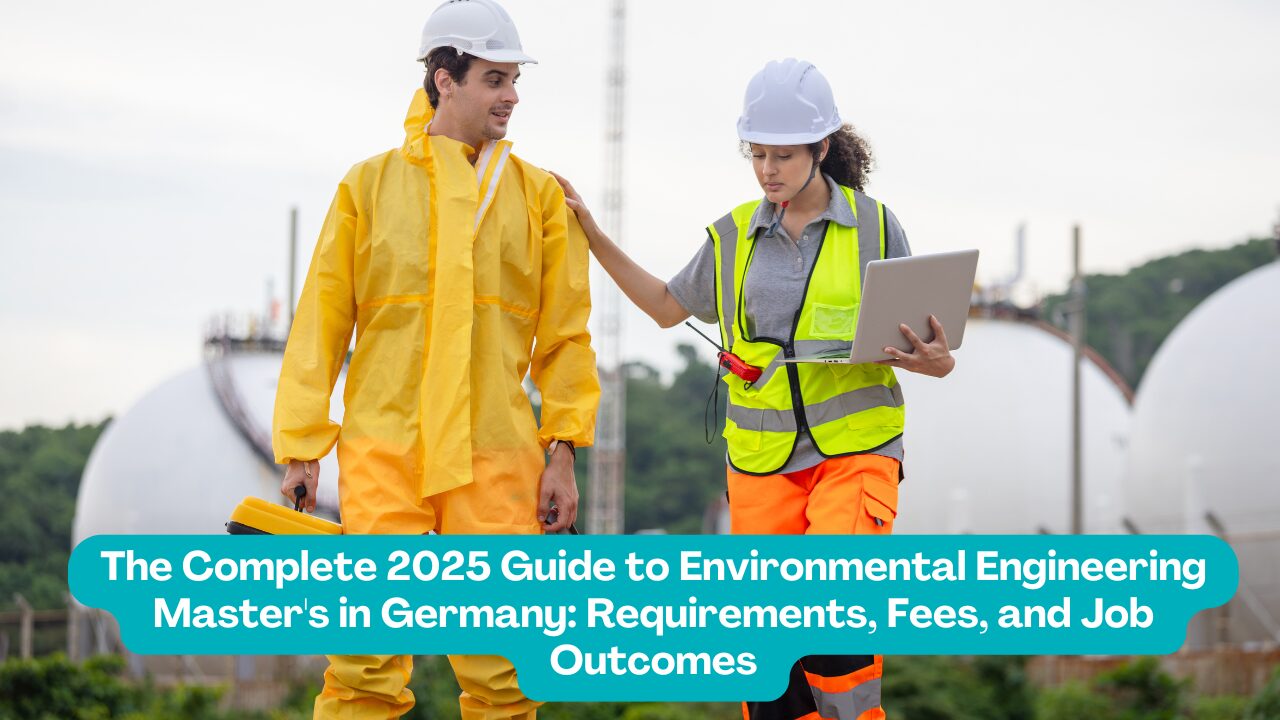
Table of Contents
- Table of Contents
- What this degree covers: core modules, specializations, and ECTS structure
- Eligibility criteria: target bachelor backgrounds, minimum grades, and recognized credentials
- English/German language requirements and when A2–C1 German is needed
- Application timeline, documents, and VPD/uni-assist notes for non-German degrees
- Public vs private costs: tuition/semester fees, Baden-Württemberg exception, and living expenses
- Where to study: examples of public programs and their intake cycles
- Work options during studies and post-study residence pathways
- Career tracks: consulting, water, waste, energy, public sector; salary signals
- Job search channels and current listings snapshots
- Common pitfalls: language readiness, ECTS gaps (180 vs 210), and documentation errors
- Voices from the community: threads on jobs, language, and program choices
- FAQs
- Conclusion & Next Steps
Germany hosts over 85% of international students pursuing Masters in Environmental Engineering in Germany, making it Europe’s top destination for this specialized field. With climate change accelerating and sustainability becoming a business imperative, this degree opens doors to impactful careers while offering tuition-free education and EU-wide opportunities. As environmental challenges intensify globally, Germany’s leadership in green technology and renewable energy creates exceptional prospects for graduates who understand both technical excellence and practical implementation.
The country’s commitment to environmental innovation shows in its investment—over €35 billion allocated to green technologies in 2024 alone. For international students, this translates into abundant internship opportunities, research partnerships, and direct pathways to employment in one of the world’s most environmentally progressive economies.
Table of Contents
- What this degree covers: core modules, specializations, and ECTS structure
- Eligibility criteria: target bachelor backgrounds, minimum grades, and recognized credentials
- English/German language requirements and when A2–C1 German is needed
- Application timeline, documents, and VPD/uni-assist notes for non-German degrees
- Public vs private costs: tuition/semester fees, Baden-Württemberg exception, and living expenses
- Where to study: examples of public programs and their intake cycles
- Work options during studies and post-study residence pathways
- Career tracks: consulting, water, waste, energy, public sector; salary signals
- Job search channels and current listings snapshots
- Common pitfalls: language readiness, ECTS gaps (180 vs 210), and documentation errors
- Voices from the community: threads on jobs, language, and program choices
- FAQs
- References
- Conclusion & Next Steps
What this degree covers: core modules, specializations, and ECTS structure
A Master’s in Environmental Engineering in Germany typically spans four semesters, delivering 120 ECTS credits through a carefully balanced curriculum. The program structure reflects Germany’s practical approach to education, combining theoretical knowledge with hands-on application.
Core modules form the foundation of your studies. You’ll dive deep into water and wastewater treatment technologies, learning both conventional and cutting-edge approaches. Environmental process engineering teaches you how to design systems that minimize environmental impact while maximizing efficiency. Air pollution control covers everything from industrial emissions to urban air quality management. Environmental modeling introduces you to computational tools that predict environmental changes and assess intervention strategies. Geotechnics rounds out the core by exploring soil-structure interactions and contaminated site remediation.
Specialization tracks allow you to focus your expertise. Sustainable energy specializations cover renewable energy integration, energy efficiency in buildings, and smart grid technologies. Waste management tracks explore circular economy principles, recycling technologies, and waste-to-energy systems. Urban water systems specializations focus on smart city infrastructure, stormwater management, and water security. Climate adaptation tracks prepare you for the growing field of climate resilience planning. Environmental informatics combines environmental science with data analytics and artificial intelligence.
The thesis and research component typically occupies your final semester. Many students collaborate directly with industry partners, solving real-world challenges while building professional networks. This industry connection often leads directly to job offers upon graduation.
German programs emphasize laboratory work and practical training throughout. You’ll spend significant time in state-of-the-art facilities, working with equipment you’ll encounter in professional settings. This hands-on approach makes German graduates highly sought after by employers across the EU.
Eligibility criteria: target bachelor backgrounds, minimum grades, and recognized credentials
Admission to a Master’s in Environmental Engineering in Germany requires careful attention to academic prerequisites. Universities seek students with solid technical foundations who can thrive in rigorous programs.
Bachelor’s degree requirements are specific but flexible. Environmental Engineering graduates find the smoothest path, but Civil Engineering, Chemical Engineering, and Mechanical Engineering backgrounds are widely accepted. Some programs welcome students from Environmental Science, Chemistry, or Physics backgrounds, though additional coursework may be required. Your degree must represent at least six semesters of study, equivalent to 180 ECTS credits, though some competitive programs prefer 210 ECTS.
Grade requirements vary by institution but generally follow German standards. Most public universities expect a minimum 2.5 on the German scale, roughly equivalent to 65% in Indian grading systems or a 3.0 GPA in American systems. Top-tier programs like those at TU Munich or RWTH Aachen may require higher grades, particularly for competitive specializations.
Credential recognition is crucial for international applicants. Your degree must be recognized by Anabin, Germany’s database of foreign educational qualifications, or evaluated through uni-assist. This process can take several weeks, so start early. Some universities require specific coursework in mathematics, chemistry, or physics—review program requirements carefully.
If your background differs from typical engineering fields, don’t be discouraged. Many programs offer bridge courses or preparatory modules to help you succeed. For personalized guidance on strengthening your application, consider professional counseling services.
English/German language requirements and when A2–C1 German is needed
Language requirements for a Master’s in Environmental Engineering in Germany reflect the international nature of these programs while acknowledging the practical benefits of German proficiency.
English-taught programs dominate the landscape, especially at major public universities. Most require IELTS scores of 6.5 or higher, with some sections requiring a minimum of 6.0. TOEFL iBT scores typically need to reach 90 or above. Some universities accept Cambridge certificates or other standardized tests—check specific requirements for your target programs.
German-taught programs require higher language proficiency. TestDaF with a minimum level 4 in all sections is standard, as is DSH-2 certification. Goethe Institute C1 certificates are widely accepted. These programs often offer deeper integration into German academic and professional culture but may limit your initial networking if you’re not fluent.
Hybrid expectations are increasingly common. Even English-taught programs may require basic German proficiency (A2 to B1 level) for practical reasons. Internships, part-time jobs, and daily life become much easier with German skills. Some universities offer intensive German courses during your first semester to help you reach functional proficiency.
Strategic language planning can significantly impact your career prospects. While you can complete your degree in English, B2 or higher German proficiency opens dramatically more job opportunities. German companies, even international ones, often conduct business in German. Government positions and consulting roles typically require strong German skills.
Consider starting German lessons before applying. Even basic proficiency demonstrates commitment and makes your application more competitive. Many universities offer pre-arrival online courses to help international students prepare.
Application timeline, documents, and VPD/uni-assist notes for non-German degrees
Successfully applying for a Master’s in Environmental Engineering in Germany requires careful timeline management and meticulous document preparation.
Application windows follow predictable patterns but vary by university. Winter intake programs, starting in October, typically open applications between November and March or April. This represents the main admission cycle with the most program options. Summer intake programs, beginning in April, are less common but offer additional opportunities, with deadlines usually falling between September and December.
Essential documents form the foundation of your application. Academic transcripts must be official and translated if not in English or German. Your degree certificate needs authentication and translation. A comprehensive CV should highlight relevant academic and professional experience. Your motivation letter must be specific to the program and demonstrate clear career goals. Reference letters from professors or employers add credibility to your application. Language certificates must be current and meet minimum requirements. A passport copy completes the basic package.
VPD requirements are crucial for international applicants. The Vorprüfungsdokumentation (VPD) from uni-assist serves as a preliminary credential evaluation for many German universities. This process can take 4-6 weeks, so submit documents early. The VPD costs approximately €75 for the first university and €30 for each additional institution. Some universities handle credential evaluation internally, but most rely on uni-assist for international degrees.
GRE requirements vary significantly. Some competitive programs require GRE scores, particularly for research-focused tracks. Check specific requirements early, as GRE preparation and scheduling can take several months.
Timeline recommendations suggest starting preparation 12-15 months before your intended start date. This allows time for language preparation, credential evaluation, and document gathering. Early preparation also enables you to apply to multiple programs, increasing your chances of acceptance and scholarship opportunities.
For complex applications or competitive programs, professional guidance can streamline the process and improve your chances of success.
Public vs private costs: tuition/semester fees, Baden-Württemberg exception, and living expenses
The financial landscape for a Master’s in Environmental Engineering in Germany offers exceptional value compared to other international destinations.
Public university costs represent one of Germany’s most attractive features for international students. Most public universities charge no tuition fees, requiring only semester contributions ranging from €150 to €350 per semester. These fees cover student services, public transportation, and administrative costs. This policy applies to all students regardless of nationality, making German education remarkably accessible.
The Baden-Württemberg exception is important to understand. This state charges €1,500 per semester for non-EU international students, significantly increasing costs compared to other regions. However, many excellent programs exist outside this state, and even with the fee, costs remain competitive internationally.
Private university tuition varies considerably, typically ranging from €5,000 to €10,000 per semester. Private institutions may offer smaller class sizes, specialized facilities, or unique industry partnerships, but public universities generally provide equivalent or superior education quality.
Living expenses require careful budgeting. Monthly costs typically range from €950 to €1,200, depending on location and lifestyle. Munich and Frankfurt represent the higher end, while cities like Leipzig or Dresden offer more affordable options. Major expense categories include rent (€400-€700), health insurance (€110), food (€200-€300), transportation (€80-€100), and miscellaneous expenses (€150-€200).
Annual budget planning should account for €11,500 to €13,000 in total yearly expenses, excluding tuition where applicable. Many students offset costs through part-time work, which is permitted and often readily available near university campuses.
Financial aid options include DAAD scholarships, university-specific grants, and private foundation funding. Research opportunities must be applied for early, as many scholarships require separate applications with earlier deadlines.
Ready to explore funding options and create a personalized budget plan? Professional guidance can help you identify cost-saving strategies and scholarship opportunities.
Where to study: examples of public programs and their intake cycles
Germany’s landscape of environmental engineering programs offers diverse options across the country, each with unique strengths and specializations.
TU Munich stands as a global leader, offering an MSc Environmental Engineering taught in English with an October intake. The program emphasizes research excellence and industry collaboration, with particularly strong connections to the automotive and renewable energy sectors. Munich’s location provides access to numerous multinational corporations and cutting-edge research facilities.
TU Berlin provides MSc Environmental Engineering in both English and German, also with October start dates. Berlin’s vibrant startup ecosystem and government proximity create unique opportunities for environmental policy and innovation work. The program offers excellent urban sustainability specializations.
RWTH Aachen delivers world-renowned engineering education through its English-taught Environmental Engineering program. Aachen’s proximity to the Netherlands and Belgium provides EU-wide networking opportunities. The program excels in industrial environmental applications and clean technology development.
Leibniz University Hannover offers MSc Water Resources and Environmental Management, focusing specifically on water-related challenges. This specialization addresses growing global water security concerns and provides excellent career prospects in consulting and international development.
Karlsruhe Institute of Technology (KIT) presents MSc Water Science & Engineering, combining technical expertise with policy understanding. KIT’s research reputation and industry partnerships create exceptional thesis opportunities and job prospects.
Intake patterns predominantly favor winter semester starts (October), aligning with the German academic calendar and providing optimal timing for internships and thesis work. Summer intake options (April) exist but are less common and may have limited specialization choices.
Regional considerations matter for career planning. North Rhine-Westphalia offers industrial opportunities, Bavaria provides automotive and technology connections, and Berlin presents policy and startup environments. Consider your career goals when selecting locations.
For comprehensive program comparisons and application strategy, explore detailed university profiles and admission requirements through official channels like DAAD and Study in Germany portals.
Work options during studies and post-study residence pathways
Germany’s work policies for international students pursuing a Master’s in Environmental Engineering create excellent opportunities for professional development and financial support.
During-study work permissions allow international students to work up to 120 full days or 240 half days annually. This flexibility accommodates both regular part-time employment and intensive project work during semester breaks. Many students find research assistantships within their departments, providing relevant experience while earning income.
Common employment types include laboratory assistantships, where you’ll gain hands-on experience with equipment and procedures relevant to your studies. English tutoring offers a steady income, particularly in smaller German cities where native English speakers are in demand. Service sector jobs in restaurants or retail provide German language practice and cultural integration opportunities. Project-based work with environmental consultancies can build professional networks and practical experience.
Post-graduation pathways are exceptionally favorable in Germany. Upon completing your Master’s in Environmental Engineering, you receive an 18-month post-study work visa specifically designed to help you find employment in your field. This generous timeframe allows for thorough job searching and networking.
Blue Card eligibility provides a clear path to long-term residence. With a relevant job offer and minimum salary (approximately €45,000 annually in 2025, subject to annual adjustments), you can obtain an EU Blue Card. This status offers significant benefits, including travel freedom within the EU and accelerated permanent residency timelines.
Permanent residency progression becomes possible after 21 months of skilled employment with a Blue Card, or 33 months with regular employment authorization. Germany’s immigration policies actively encourage skilled professionals to remain and contribute to the economy.
Family reunification options exist for married students and Blue Card holders, making Germany an attractive destination for those planning to build lives in Europe.
The combination of study-period work opportunities and post-graduation pathways creates a smooth transition from student to professional life in one of Europe’s strongest economies.
Career tracks: consulting, water, waste, energy, public sector; salary signals
A Master’s in Environmental Engineering in Germany opens doors to diverse, high-impact career paths across multiple sectors experiencing rapid growth.
Environmental consulting represents one of the largest employment sectors. Major firms like Ramboll, Arcadis, and German companies like Dornier Consulting actively recruit graduates. Consultants work on environmental impact assessments, sustainability planning, and regulatory compliance projects. The work combines technical analysis with client interaction and project management. International projects are common, providing global career development opportunities.
Water and wastewater sectors offer stable, growing opportunities. German utilities like Veolia and local municipal water authorities need engineers for treatment plant design, water quality management, and infrastructure modernization. Smart water systems and digitalization create new specializations requiring both technical and IT skills.
Waste management and circular economy fields are expanding rapidly. Companies focus on recycling technology, waste-to-energy systems, and circular economy implementation. Germany’s leadership in recycling technology creates export opportunities to developing markets worldwide.
Renewable energy sectors provide dynamic career paths. Wind energy, solar installations, and energy storage systems require environmental engineers for site assessment, environmental compliance, and system optimization. Germany’s Energiewende (energy transition) creates abundant opportunities in this sector.
Public sector positions exist at the federal, state, and local levels. Environmental agencies, urban planning departments, and research institutes offer careers in policy development, regulatory enforcement, and applied research. These positions often provide excellent work-life balance and job security.
Salary expectations vary by sector and experience level. Entry-level positions typically range from €44,000 to €55,000 annually. With 3-5 years of experience, salaries generally increase to €55,000-€70,000. Senior positions and management roles can reach €80,000 or higher. German language proficiency and specialized certifications can accelerate salary progression.
Geographic variations affect compensation. Munich, Frankfurt, and Stuttgart offer higher salaries but also higher living costs. Smaller cities may offer lower salaries but better work-life balance and lower expenses.
Job search channels and current listings snapshots
The German job market for environmental engineering professionals offers multiple pathways to career opportunities, with both traditional and digital channels providing access to positions.
University career services provide your first line of support. Most German universities maintain active relationships with environmental employers and regularly host job fairs specifically for engineering graduates. Career counselors understand visa requirements and can help international students navigate application processes effectively.
Major job portals dominate online searching. StepStone serves as Germany’s leading professional job platform, with sophisticated filtering options for environmental engineering positions. Indeed, Germany offers broad coverage, including smaller companies and startups. LinkedIn Germany has become increasingly important, particularly for international companies and consulting firms seeking English-speaking professionals.
Company websites often list positions before they appear on general job boards. Major environmental employers like Siemens Environmental Solutions, TÜV organizations, and international consultancies regularly update their career pages. Setting up job alerts directly with target companies can provide early access to opportunities.
Industry associations provide networking and job placement services. The German Association of Environmental Engineers (VDI-Gesellschaft Energie und Umwelt) offers member job boards and networking events. Professional associations also provide continuing education opportunities that enhance employability.
The current market snapshot shows strong demand across multiple sectors. Recent data indicates over 1,800 open positions in environmental engineering and related fields across Germany. Urban centers like Berlin, Munich, and Hamburg show particularly high demand, while industrial regions in North Rhine-Westphalia offer numerous consulting and manufacturing opportunities.
Internship pathways often lead to full-time employment. Many German companies use internships as extended interview processes, with high conversion rates to permanent positions for successful interns. University career services can help identify internship opportunities that align with your career goals.
Networking strategies prove crucial in the German job market. Professional events, industry conferences, and alumni networks provide valuable connections. Many positions are filled through professional networks before being publicly advertised.
Common pitfalls: language readiness, ECTS gaps (180 vs 210), and documentation errors
International applicants for a Master’s in Environmental Engineering in Germany often encounter predictable challenges that can derail otherwise strong applications.
Language preparation mistakes rank among the most common issues. Many students underestimate the importance of German language skills, even for English-taught programs. While you can complete coursework in English, internships, part-time jobs, and networking opportunities often require German proficiency. Students who arrive with only basic German skills frequently struggle to integrate professionally and socially.
ECTS credit discrepancies create application complications. Some German programs require 210 ECTS credits from your bachelor’s degree, while many international programs provide only 180 ECTS. This gap doesn’t automatically disqualify you, but it may require additional coursework or bridge programs. Some universities offer conversion options or accept relevant work experience to bridge the gap.
Documentation errors can delay or derail applications entirely. Common mistakes include submitting unofficial transcripts, missing translation certifications, or providing incomplete academic records. The VPD process through uni-assist requires specific document formats and authentication procedures that vary by country of origin.
Timeline mismanagement affects many international applicants. German university application processes can take longer than expected, particularly when credential evaluation is required. Students often underestimate the time needed for language preparation, document gathering, and visa processing.
Program mismatch occurs when students don’t carefully research program requirements and specializations. Some programs focus heavily on research, while others emphasize practical application. Misalignment between your goals and program structure can lead to dissatisfaction and poor outcomes.
Financial planning oversights include underestimating living costs or overestimating part-time work income potential. While Germany offers affordable education, living expenses in major cities can strain budgets, particularly during your first semester before establishing income sources.
Solutions and prevention strategies begin with early, thorough preparation. Start language learning immediately, even if your target program is English-taught. Research ECTS requirements carefully and explore bridge options if needed. Use professional services for document preparation and application review when dealing with complex situations.
For comprehensive application support and personalized guidance to avoid these common pitfalls, consider professional counseling services that specialize in German university admissions.
Voices from the community: threads on jobs, language, and program choices
The international student community pursuing environmental engineering in Germany shares valuable insights through various online platforms and forums.
Language learning experiences consistently emphasize the career benefits of German proficiency. One graduate shared, “Learning German beyond A2 was the best investment for job hunting. Even though my program was in English, every interview included German conversation, and my language skills set me apart from other international candidates.”
Internship and job search stories reveal the competitive but rewarding nature of the German market. Students frequently report that paid internships, while competitive, often lead directly to full-time offers. “My semester thesis project with a consulting firm turned into a part-time position, then a full-time offer before graduation,” noted one recent graduate.
Financial management insights show that living costs are manageable with proper planning. Many students successfully balance studies with part-time work, particularly in research assistant positions that complement their academic focus. “Semester fees and living costs are definitely manageable with part-time work, but you need to budget carefully and start networking early,” shared a current student in Munich.
Program selection advice emphasizes the importance of researching specializations and faculty expertise. Students recommend connecting with current students and recent graduates through LinkedIn and university networks before making final program choices. “The specialization options weren’t clear from the website, but talking to current students helped me understand which track would best match my career goals,” explained one applicant.
Cultural integration experiences highlight the importance of engaging with both international and German student communities. Many successful students emphasize joining student organizations, participating in university events, and seeking German conversation partners to accelerate language learning and cultural understanding.
Career transition stories demonstrate the diverse paths available to graduates. Some move directly into consulting roles, others pursue PhD programs, and many find positions with multinational corporations that value their German education and language skills.
For current discussions and peer connections, explore platforms like Study in Germany forums, Reddit communities focused on German education, and LinkedIn groups for international students in Germany.
FAQs
- Is a Master’s in Environmental Engineering in Germany taught in English?Yes, many top German universities offer this master’s program in English, particularly at technical universities like TU Munich, TU Berlin, and RWTH Aachen. However, learning German significantly improves job prospects and daily life integration, even if your coursework is conducted in English.
- What are the main admission requirements?You need a relevant bachelor’s degree (usually 180–210 ECTS) in environmental engineering, civil engineering, chemical engineering, or related fields. Minimum GPA requirements typically equal 2.5 on the German scale (approximately 65% in Indian systems). You’ll also need language certificates and VPD documentation if your degree is from outside Germany.
- Are there any tuition fees?Most public universities charge no tuition fees, only semester contributions of €150–€350. The exception is Baden-Württemberg, which charges €1,500 per semester for non-EU students. Private universities typically charge €5,000–€10,000 per semester.
- Can I work while studying?Yes, international students can work up to 120 full days or 240 half days per year. Many students find research assistantships, tutoring positions, or part-time work in relevant industries to gain experience and supplement their income.
- What are the job prospects after graduation?Germany’s growing environmental sector offers excellent opportunities in consulting, utilities, renewable energy, and public agencies. Starting salaries typically range from €44,000–€55,000 annually, with strong potential for career advancement and salary growth.
- How do I apply if my bachelor’s is from outside Germany?Apply through uni-assist and obtain VPD documentation for credential evaluation. Ensure your degree is recognized through Anabin and meets ECTS requirements. Start this process early, as credential evaluation can take several weeks.
- Do I need to know German?For English-taught programs, German isn’t always required for admission. However, B1–B2 German proficiency is highly recommended for internships, jobs, and social integration. Many universities offer German courses to help international students develop language skills.
- What’s the ROI of a Master’s in Environmental Engineering in Germany?With minimal or no tuition costs, strong job outcomes, and pathways to permanent residency, the return on investment ranks among the highest in Europe for this field. The combination of quality education, career opportunities, and EU mobility creates exceptional long-term value.
Conclusion & Next Steps
A Master’s in Environmental Engineering in Germany represents far more than an academic credential—it’s a strategic investment in a sustainable future, both for your career and the planet. With Germany’s commitment to environmental leadership, tuition-free education at world-class institutions, and clear pathways to European residency, this degree offers an exceptional return on investment for motivated international students.
The combination of technical excellence, practical application, and industry integration makes German environmental engineering programs uniquely valuable in today’s job market. As climate challenges intensify globally, the skills and networks you’ll develop in Germany position you at the forefront of solutions that matter. Whether your interests lie in renewable energy innovation, urban sustainability planning, or environmental consulting, German programs provide the foundation for meaningful, well-compensated careers.
Success requires careful planning, from language preparation and application strategy to financial planning and career networking. The investment of time and effort in thorough preparation pays dividends throughout your academic journey and professional career. With proper guidance and strategic planning, your Master’s in Environmental Engineering in Germany can become the catalyst for a globally impactful career in environmental solutions.
Also useful for Germany applicants:
Ready to transform your environmental engineering aspirations into reality? Get personalized guidance on your German master’s application now.