
Masters in Electronics Engineering in Germany: Complete Guide for 2026

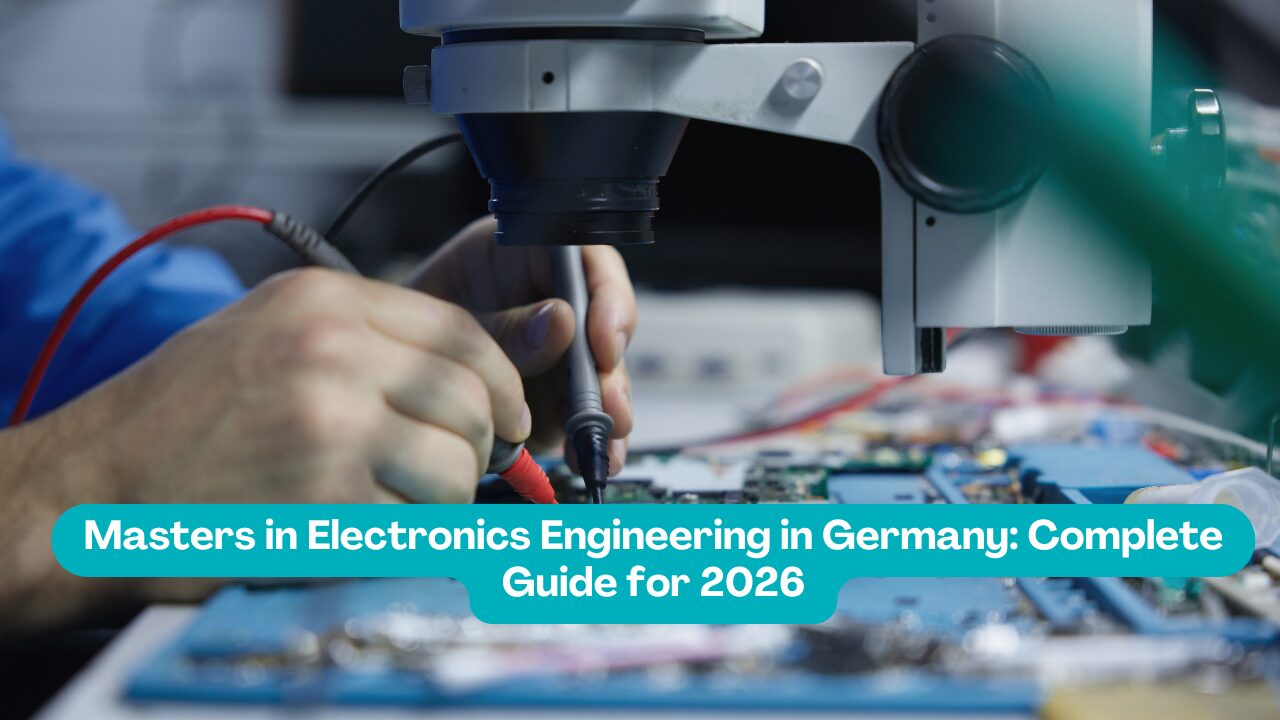
Thinking about pursuing a Masters in Electronics Engineering in Germany? Germany continues to attract a large number of international students because of its strong academic reputation, practical engineering focus, and relatively low cost of education at many public universities. For electronics and related fields such as automation, embedded systems, communications, and semiconductor technology, Germany offers a clear advantage. Universities work closely with industry, ensuring that what students study reflects current technical and professional requirements.
“Germany is the most popular non-English-speaking destination for international students due to its academic standards, low tuition, and strong employment outcomes.” – DAAD
Whether you are a recent graduate, a working professional, or a parent planning ahead, this guide explains how a Masters in Electronics Engineering in Germany works in practice. It covers admissions, program structure, costs, scholarships, visa requirements, and career outcomes for 2026.
Table of Contents
- Why Study Electronics Engineering Masters in Germany
- Types of Electronics Engineering Programs Available in Germany
- Top Universities Offering Electronics Engineering Masters in Germany
- Admission Requirements for Electronics Engineering Masters Programs
- Application Process and Documentation for German Universities
- Tuition Fees and Cost of Living for Students in Germany
- Scholarship Opportunities for International Students in Germany
- Specializations and Focus Areas in Electronics Engineering
- Duration and Curriculum Structure of Masters Programs
- Career Opportunities and Job Market in Germany After Graduation
- Student Visa Process and Work Permits in Germany
- Frequently Asked Questions About Electronics Engineering Masters in Germany
Why Study Electronics Engineering Masters in Germany
Germany is widely known for engineering education, especially in electronics, industrial systems, automation, and communication technology. A Masters in Electronics Engineering in Germany is suitable for students who want strong technical training combined with practical exposure.
Key reasons students choose Germany include:
- Curricula designed around current industry requirements
- Access to advanced laboratories and applied research environments
- Close connection with automotive, manufacturing, and electronics sectors
- Low or no tuition at many public universities
- An international academic setting that supports global careers
Germany places strong emphasis on applied learning, which helps graduates transition into professional roles more smoothly. For students considering a Masters in Electronics Engineering in Germany, the long-term value often lies in employability and cost efficiency rather than brand value alone.
Types of Electronics Engineering Programs Available in Germany
Electronics engineering master’s programs in Germany vary by focus and structure. Universities offer multiple formats depending on academic orientation and career goals.
Common options include:
- MSc (Master of Science), which emphasizes theory and research
- MEng (Master of Engineering), which focuses more on applied coursework
- English-taught programs, widely available at international-facing universities
- German-taught programs, offering wider specialization options for fluent speakers
Many universities also offer interdisciplinary programs combining electronics with computer engineering, communication systems, automation, or embedded technologies. Selecting the right program depends on your academic background and professional direction.
Top Universities Offering Electronics Engineering Masters in Germany
Several German universities are known for strong electronics and electrical engineering programs. Popular choices for a Masters in Electronics Engineering in Germany include:
- Technical University of Munich (TUM)
- RWTH Aachen University
- Karlsruhe Institute of Technology (KIT)
- TU Berlin
- TU Dresden
- University of Stuttgart
- Leibniz University Hannover
These institutions offer solid academic infrastructure, research output, and industry exposure. Updated program lists and eligibility details can be found through DAAD and the official Study in Germany portal.
Admission Requirements for Electronics Engineering Masters Programs
Admission to a Masters in Electronics Engineering in Germany can be competitive, particularly at public technical universities. Most programs look for clear academic preparation in relevant subjects.
Typical requirements include:
- A bachelor’s degree in electronics, electrical engineering, or a related field
- Minimum GPA requirement, often stated using the German grading scale
- English language test scores for English-taught programs or German proficiency for German-taught programs
- Academic transcripts and a structured CV
- Statement of Purpose and Letters of Recommendation
- GRE or GATE scores for selected programs
Requirements vary by university, so applicants should always verify details directly through official university websites or platforms such as uni-assist.
Application Process and Documentation for German Universities
The application process for a Masters in Electronics Engineering in Germany is systematic and predictable when planned early.
A typical process includes:
- Shortlisting universities and programs
- Preparing academic and language documents
- Submitting applications through university portals or uni-assist
- Paying processing fees where applicable
- Tracking application status and preparing for visa steps after admission
To avoid repeated corrections and delays, applicants benefit from structured planning. Ifouting your process with Masters in Electronics Engineering in Germany admissions guidance
https://staging.galvanizetestprep.com/admission-counselling/
Tuition Fees and Cost of Living for Students in Germany
One of the practical benefits of a Masters in Electronics Engineering in Germany is affordability.
General cost expectations include:
- Public universities: typically no tuition, with a semester contribution of around €200–€350
- Private universities: often €5,000–€10,000 per year
- Living expenses: approximately €850–€1,100 per month depending on city and lifestyle
Compared to many other study destinations, Germany offers strong academic quality at a lower overall cost.
Scholarship Opportunities for International Students in Germany
Although tuition costs are low, scholarships help reduce living expenses. Students pursuing a Masters in Electronics Engineering in Germany commonly explore:
- DAAD scholarships
- Deutschlandstipendium
- Erasmus+ and EU mobility programs
- University-specific funding schemes
Scholarship deadlines are often early, and competition is high. Clear academic planning and consistent documentation improve success rates.
Specializations and Focus Areas in Electronics Engineering
A Masters in Electronics Engineering in Germany may offer specialization areas such as:
- Embedded Systems
- Microelectronics and Nanoelectronics
- Communication Engineering
- Control Systems and Automation
- Power Electronics
- Signal Processing
Specialization choice should reflect your academic strengths and career plans. Many programs integrate applied projects linked to industry needs.
Duration and Curriculum Structure of Masters Programs
Most electronics engineering master’s programs in Germany last two years.
A typical structure includes:
- Core technical modules
- Elective courses linked to specialization
- Laboratory and project work
- A master’s thesis, often connected to applied research or industry collaboration
Internships or project-based courses are common and support smoother transition into professional roles.
Career Opportunities and Job Market in Germany After Graduation
Germany’s engineering sector supports a wide range of electronics-related careers. After completing a Masters in Electronics Engineering in Germany, graduates often work in:
- Automotive electronics and control systems
- Semiconductor and electronics manufacturing
- Telecommunications
- Automation and industrial systems
- Research and academic institutions
Starting salaries often fall between €45,000 and €55,000 per year, depending on role, region, and experience. A German master’s degree also supports employment across the European Union.
Student Visa Process and Work Permits in Germany
International students require a German student visa.
Common requirements include:
- University admission letter
- Proof of funds through a blocked account or approved alternatives
- Health insurance
- Visa application through the local German mission
Students are permitted limited part-time work during studies under current regulations. After graduation, Germany allows an 18-month period to search for suitable employment, subject to eligibility.
Frequently Asked Questions About Electronics Engineering Masters in Germany
Frequently Asked Questions
Is German language required?
Many programs are taught in English. German skills are helpful for daily life and work but not mandatory for English-taught programs.
What are acceptance rates?
Rates vary widely. Competitive universities may admit 10–20 percent of applicants.
Can students work part-time?
Yes, within defined legal limits.
Are there age limits?
No formal age limits, though recent graduates are often preferred.
Is long-term residence possible?
Germany offers structured pathways based on employment and residence rules.
Conclusion
A Masters in Electronics Engineering in Germany offers strong academic training, applied learning, and cost control that few destinations match. Students who plan carefully, choose programs based on fit, and prepare consistent documentation are more likely to achieve positive academic and career outcomes.
Also useful for Germany applicants:
From admissions and funding to post-study work options, Germany provides a structured and transparent system for international students. If you want to approach this journey with clarity and fewer avoidable mistakes, use Masters in Electronics Engineering in Germany admissions guidance.