
Masters in Aeronautical Engineering in Germany: Costs, Top Universities, Eligibility, and Jobs in 2025

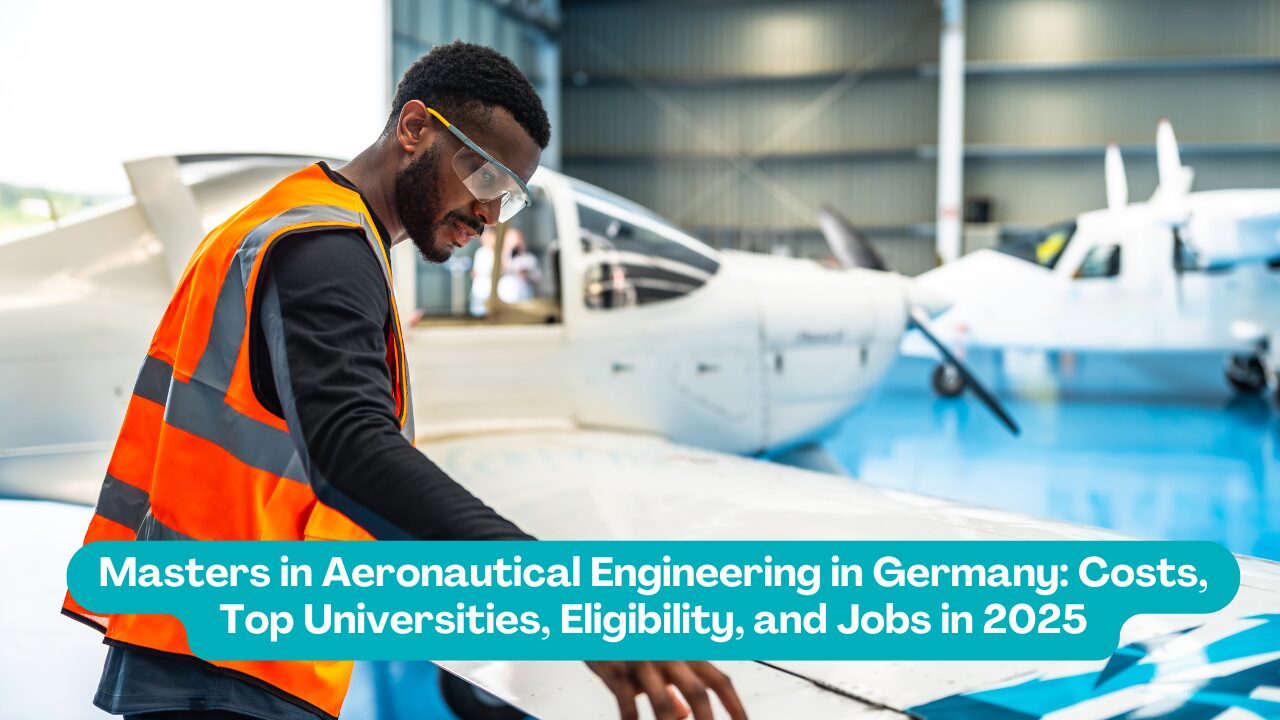
Germany has become a go-to destination for engineering graduates who want cutting-edge research, strong industry integration, and a realistic path to global careers. Public universities keep tuition costs low or zero, major aerospace employers collaborate closely with campuses, and graduates benefit from clear post-study work options inside the European Union. For prospective students comparing countries, the value proposition is compelling. You can study advanced aerodynamics, propulsion, and systems design in laboratories that collaborate with leading organizations while paying only a modest semester contribution rather than full tuition. Official resources such as Study in Germany, DAAD, and the application gateway Uni-Assist can help you verify program details, scholarship timelines, and visa requirements.
This guide explains the essentials for a Masters in Aeronautical Engineering in Germany, including costs, eligibility, language options, specializations, internships, funding, application windows, and career outcomes, so you can plan your next step with confidence.
Table of Contents
Tuition fees and total cost of study in Germany
Admission requirements and eligibility criteria
English-taught vs German-taught programs
Curriculum and specializations
Internships and industry links
Scholarships and funding
Application timelines and deadlines
Career prospects and salaries in Germany
FAQs
Conclusion
Tuition Fees and Total Cost of Study in Germany
Most public universities charge no tuition for international students. You typically pay a semester contribution of about €250 to €350 that covers administration and public transport. Monthly living costs usually fall in the €850 to €1,100 range depending on city, housing type, and lifestyle, which puts a realistic annual budget near €10,500 to €13,000. Students must also show financial proof for the visa via a Blocked Account for one year and carry statutory or approved private health insurance while enrolled. Detailed guidance on living costs, insurance, and student finance is available through Study in Germany. Compared with the United States or the United Kingdom, a Masters in Aeronautical Engineering in Germany offers strong return on investment due to low fees and robust employment pathways.
Admission Requirements and Eligibility Criteria
Typical eligibility for a Masters in Aeronautical Engineering in Germany includes:
• A Bachelor’s degree in aerospace, mechanical, or a closely allied field
• Evidence of strong academic performance based on the local grading system
• Language proficiency for the chosen track: IELTS or TOEFL for English-taught programs, TestDaF or DSH for German-taught programs
• A focused Statement of Purpose and two to three Letters of Recommendation
• Program-specific prerequisites such as thermodynamics, fluid mechanics, materials, control systems, or CAD
Some universities may list optional or recommended GRE scores. Always verify department pages and application instructions through university websites and, where applicable, Uni-Assist.
English-taught vs German-taught Programs
Germany offers a growing number of English-taught Master’s programs, especially at research-intensive technical universities. English tracks usually require IELTS or TOEFL scores. German-medium degrees require TestDaF with level 4 or DSH-2 or equivalent. If you choose an English program, begin learning German in parallel to improve internship access, part-time work opportunities, and long-term employability. You can search current offerings and filter by language, location, and specialization via the DAAD course finder.
Curriculum and Specializations
Aeronautical curricula blend theoretical depth with applied projects and thesis research. Common core areas include:
• Aerodynamics and Flight Mechanics
• Propulsion Systems including gas turbines and turbofans
• Structures and Materials with focus on composites and fatigue
• Avionics and Control Systems
• Computational Fluid Dynamics
• Finite Element Methods
Programs often allow thematic tracks such as unmanned aerial systems, aeroelasticity, space propulsion interfaces, or aircraft manufacturing. Standard duration is two years across four semesters, culminating in a research thesis and often a practical training component.
Internships and Industry Links
A major advantage of studying in Germany is the proximity to aerospace leaders and Tier-1 suppliers. Many departments run joint labs, sponsored projects, or co-op terms with partners such as Airbus, the German Aerospace Center DLR, MTU Aero Engines, and Lufthansa Technik. Career fairs and research assistantships provide early exposure to real problems in design, testing, simulation, and certification. While not always required, German language proficiency significantly improves access to internships and working student roles.
Scholarships and Funding
Even with low tuition, you will need a plan for living costs. Options include:
• Competitive national funding from DAAD that can cover a monthly stipend and, in some cases, additional benefits
• University merit grants or departmental awards, where available
• Part-time student work within the legal limit of 120 full or 240 half days per year
• The required Blocked Account, which is opened before the visa appointment and disburses funds monthly during study
Start applications early, since some scholarships require submission 6 to 12 months before intake.
Application Timelines and Deadlines
Germany offers two primary intakes.
• Winter Semester, starting in October, is the main entry point for most programs
• Summer Semester, starting in April, includes a smaller set of offerings
Suggested planning timeline: begin research 12 to 15 months in advance, prepare documents and language tests, and target common application windows of November to January for Winter or May to July for Summer, subject to program rules. Visa processing times vary by country, so initiate the appointment early. Many universities route international applications through
Uni-Assist, which performs a preliminary document check before the campus makes an admissions decision.
Career Prospects and Salaries in Germany
Graduates benefit from Germany’s strong aerospace value chain and broader engineering demand across aviation, defense, mobility, and space systems. Typical roles include aircraft design engineer, structures or materials analyst, CFD or FEM specialist, propulsion engineer, systems and controls engineer, and flight test or simulation specialist. Entry-level salaries for engineering graduates generally start in the mid €40,000s to mid €50,000s, with experienced engineers often advancing into the €60,000 to €80,000 range, depending on region and specialization.
After graduation, students may apply for an 18-month post-study work visa to secure employment. With a qualifying role and salary, progression to the EU Blue Card and longer-term residence is possible. Official guidance on work and residence pathways is summarized across government and national portals such as Study in Germany.
FAQs
- Is Germany a good destination for Aeronautical Engineering
Yes. The combination of low tuition, research intensity, and proximity to aerospace employers makes Germany an excellent choice for aeronautical and space-focused careers. - Do I need German for an English-taught Master’s
Not strictly, but German helps substantially with internships, part-time work, and full-time roles after graduation. Many students learn German from the first semester while studying in English. - How long does the Master’s program take
Most programs take two years across four semesters and include coursework, practical work or labs, and a master’s thesis. - What GPA or CGPA do I need
Admission is competitive and program specific. Strong academic performance in relevant engineering courses is essential. Check faculty pages for minimums and prerequisite subjects. - Can I work while studying
International students can work up to 120 full days or 240 half days per year, which helps cover living costs and build experience. - Are scholarships available
Yes. National and university-level options exist, withDAADbeing the best-known national provider. Apply well in advance. - What are the job prospects after graduation
Aerospace and related engineering roles are in consistent demand. Graduates also leverage aeronautical skills in automotive, energy, simulation, and high-performance computing sectors.Also useful for Germany applicants:
- Where can I get guided support for applications
If you want structured help with shortlisting, documents, and timelines, you can exploreGalvanize Masters Admission Counseling.
Conclusion
A Masters in Aeronautical Engineering in Germany offers a rare combination of affordability, research depth, and real industry access. You can learn from leading professors, work on projects connected to major aerospace organizations, and step into a labor market that values both technical rigor and practical experience. Success begins with early planning. Map your prerequisites against program requirements, secure language scores, and prepare a focused Statement of Purpose that demonstrates fit with the specialization you want. Use authoritative resources like DAAD, Study in Germany, and Uni-Assist to confirm deadlines and documentation, then build a timeline that includes scholarship windows and visa processing. With a clear plan and consistent preparation, Germany can be your launchpad to advanced roles in aircraft design, propulsion, systems, and beyond. If you prefer a guided path from shortlist to submission, consider expert support through